

Ultrasound / Interview report
Clinical benefits and future prospects of ApliCam in the field of MSK
Introduction
Wada Orthopaedic Clinic in Hirakata City, Osaka, provides medical services for patients with a wide range of sports injuries and rheumatic diseases.
The president of the clinic, Dr. Makoto Wada, is certified in both rheumatology and sports medicine by the Japanese Orthopaedic Association.
He is actively involved in many academic societies both in Japan and overseas.
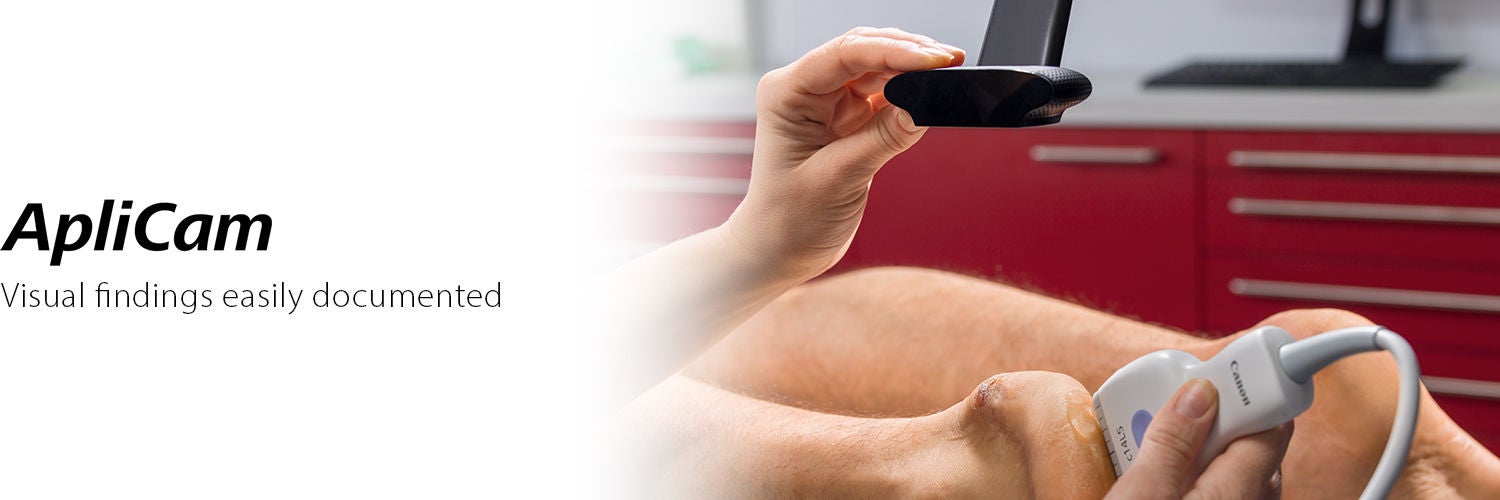
We asked Dr. Wada to share his impressions of ApliCam, a newly released function that allows users to view and record video images captured by a webcam and display them in picture-in-picture mode together with ultrasound images acquired using the Aplio i800 / Prism Edition.
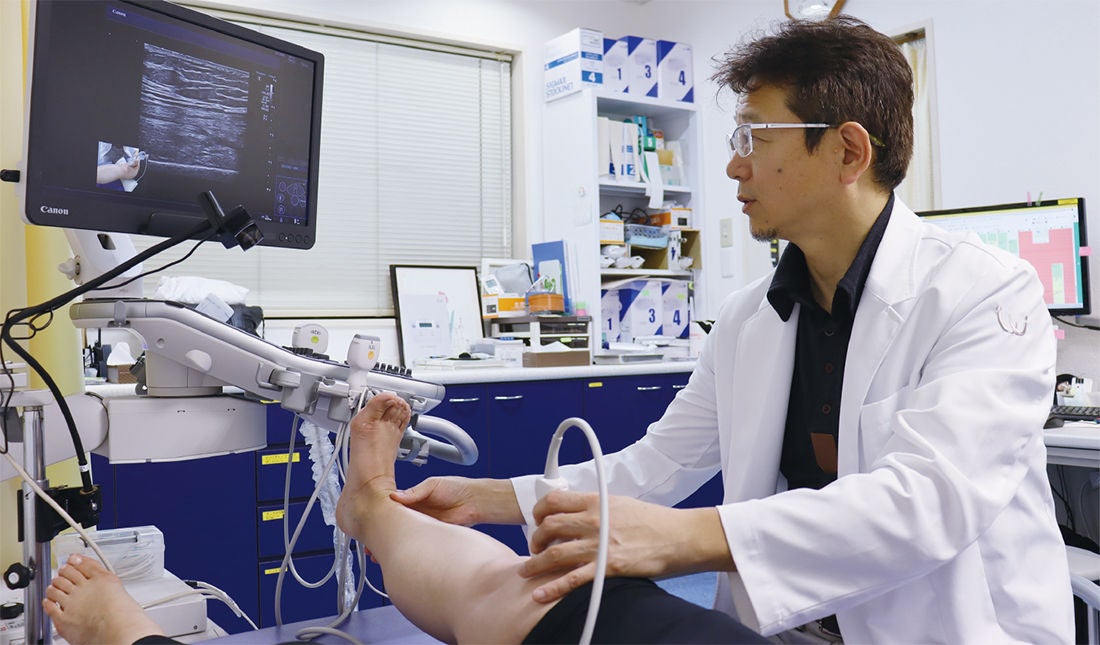 Figure 1 Dr. Makoto Wada, Wada Orthopaedic Clinic, Osaka, Japan
Impressions of ApliCam users
Unlike the simple bodymark method, ApliCam allows for the transducer position to be observed simultaneously with the acquired ultrasound images, making it much easier to understand their positional relationships during the examination. This feature is also extremely helpful for explaining the patient’s condition to a third party, such as when referring the patient to another hospital or seeking a second opinion. The conventional bodymark and annotation functions require the user to pause the examination each time to input data, but with ApliCam, the user can perform the entire examination smoothly and without interruptions. I think this feature is especially useful for presentations at academic societies. In the past, when preparing such presentations, we needed to import the ultrasound images and the video images captured by the camera into a PC and then edit them using special video editing software. But with ApliCam, presentations can be prepared quickly and efficiently in a seamless process. We really appreciate this feature. Another benefit of ApliCam is that it allows us to record video images of the needle angle and direction as well as the biopsy site synchronized with the ultrasound images during biopsy procedures.
Future potential of ultrasound examinations using ApliCam
I think that the use of ApliCam in clinical examinations offers many advantages. When we evaluate a joint during movement, ApliCam can be used to record exactly where and how the joint is moved, making it easy to reproduce the identical procedure during subsequent follow-up examinations.
This helps to save time during examinations. When we refer patients to other hospitals or receive patients referred from other hospitals, the required information can be transferred quickly and efficiently when the ultrasound images include ApliCam images. Even within the hospital, ApliCam can be used to share precise information when multiple staff members work as a team in caring for the patient.

I think that the use of ApliCam in clinical examinations offers many advantages. When we evaluate a joint during movement, ApliCam can be used to record exactly where and how the joint is moved, making it easy to reproduce the identical procedure during subsequent follow-up examinations.Dr. Makoto Wada
President of Wada Orthopaedic Clinic
Osaka, Japan
President of Wada Orthopaedic Clinic
Osaka, Japan
Clinical benefits of ApliCam
First, we believe that ApliCam can replace the conventional bodymark and annotation methods in routine examinations, resulting in shorter examination times and higher efficiency. In addition, because there were previously no effective methods for recording the biopsy site and needle angle, we have found ApliCam to be extremely useful for recording this information together with the ultrasound images for guidance during biopsy procedures.
ApliCam is also very effective when a large number of joints need to be evaluated, such as when calculating the DAS28, because it is impractical to set and record bodymarks individually for each joint. In addition, when training physicians who are learning ultrasound techniques in the field of orthopedics, ApliCam can provide highquality educational information that includes not only the ultrasound images but also video images of the transducer being applied to the target area in real time.
Figure 2 Hydrorelease of cervical part
Figure 3 Tenosynovitis of the left wrist
Conclusion
ApliCam can be used to automatically record and share valuable visual information associated with the examination. It is therefore useful in a wide range of clinical situations, allowing accurate follow-up with quick reference to past examination results, supporting efficient information-sharing among the members of the hospital’s healthcare team, ensuring quick and easy referrals to and from other hospitals, providing helpful functions for academic presentations, and promoting high-quality medical training.
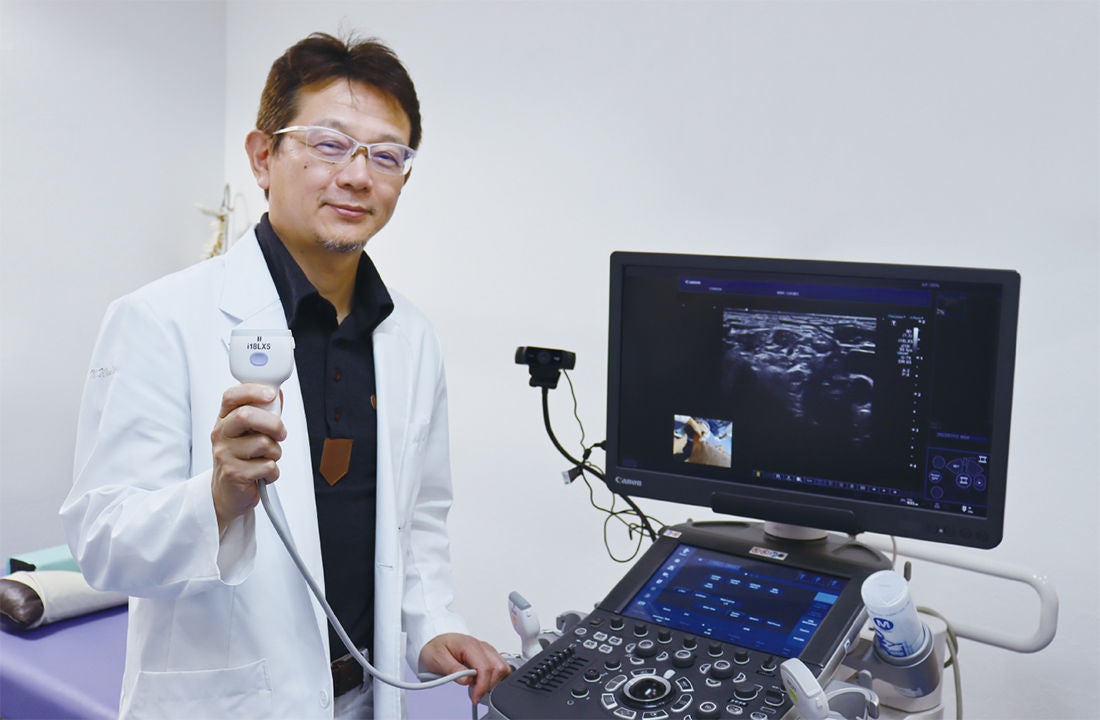 Figure 4 Dr. Wada and Aplio i800 / Prism Edition with ApliCam. The ApliCam software kit is available for Aplio i-series and Aplio a-series.
The clinical results described in this report are the experience of the author. Results may vary due to clinical setting, patient presentation and other factors.
The decision of where to attach the camera is the responsibility of the user. Canon Medical Systems takes no responsibility for any adverse consequences which may occur as a result of attaching the camera to the ultrasound system.
Learn more about us

The content reflects information available at the time of publication and may differ from current information.
Social Media


