


Latest news from our
VISIONS Magazine
How Deep Learning Reconstruction Became the Standard
September 10, 2021
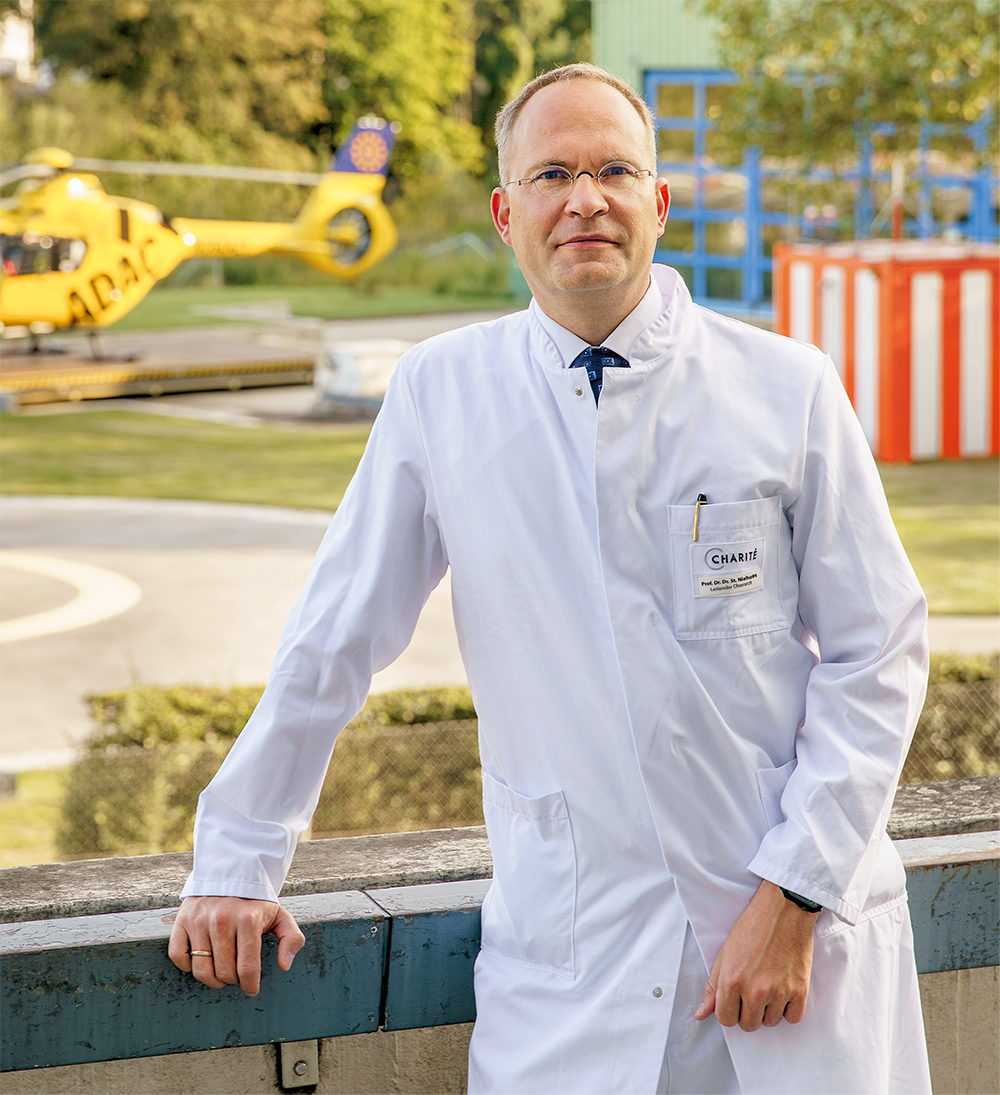 Prof. Dr. Stefan M. Niehues, MHBA, Senior physician in the department of Radiology at Charité – University Hospital in Berlin, Germany.
In 2020, we installed a wide area detector CT, the Aquilion ONE / PRISM Edition and the Advanced intelligent Clear-IQ Engine (AiCE) AI technology in our department. Adding the software to high-end CT equipment offers a fundamentally new possibility to reconstruct the images with superior image quality, great sharpness of detail and image contrast. Deep Learning Reconstruction (DLR) technology became standard practice on the very first day it was installed. The department now uses AiCE reconstruction whenever possible.
AiCE has guided us in a new era of image reconstruction that we don’t want to miss
Initially, we had the option of using DLR either for further dose reduction or, alternatively, to increase image quality. Regarding dose reduction, we’ve always been very far ahead with Canon CT equipment. In the previous protocols, we’ve been well below the diagnostic reference values of the Federal Office for Radiation Protection. We made a conscious decision to use the new technology to achieve higher image quality.
Choosing this new workflow has proven extremely successful, and we now benefit from significantly increased image quality on a daily basis.
The decision to add the new software to the Aquilion ONE / PRISM Edition was also very much appreciated by the staff, who now prefer to have AiCE available on all CT equipment.
Switching from previous equipment to the Aquilion ONE / PRISM Edition CT with AiCE technology pleased everyone. They didn’t have to refamiliarize themselves with the new system or relearn how to interpret the images.
The images are now much clearer and show a significantly increased signal-to-noise ratio (SNR), with a much better delineation of possible disease than with conventional CTs.
The noise in particular has once again significantly decreased, which facilitates better diagnosis.
Many of the Charité specialists share our enthusiasm. Cardiologists have reported that our department now delivers the best imaging results with high-tech CT compared to other radiological modalities, especially in cases where small structures are involved, e.g. revascularization of chronic coronary obstructions.
Our imaging is now considered the standard for planning recanalizations of chronic total coronary occlusions (CTO). We receive nothing but praise and great satisfaction from the cardiology department. In cardio diagnostics, volume CT is now absolutely prioritized.
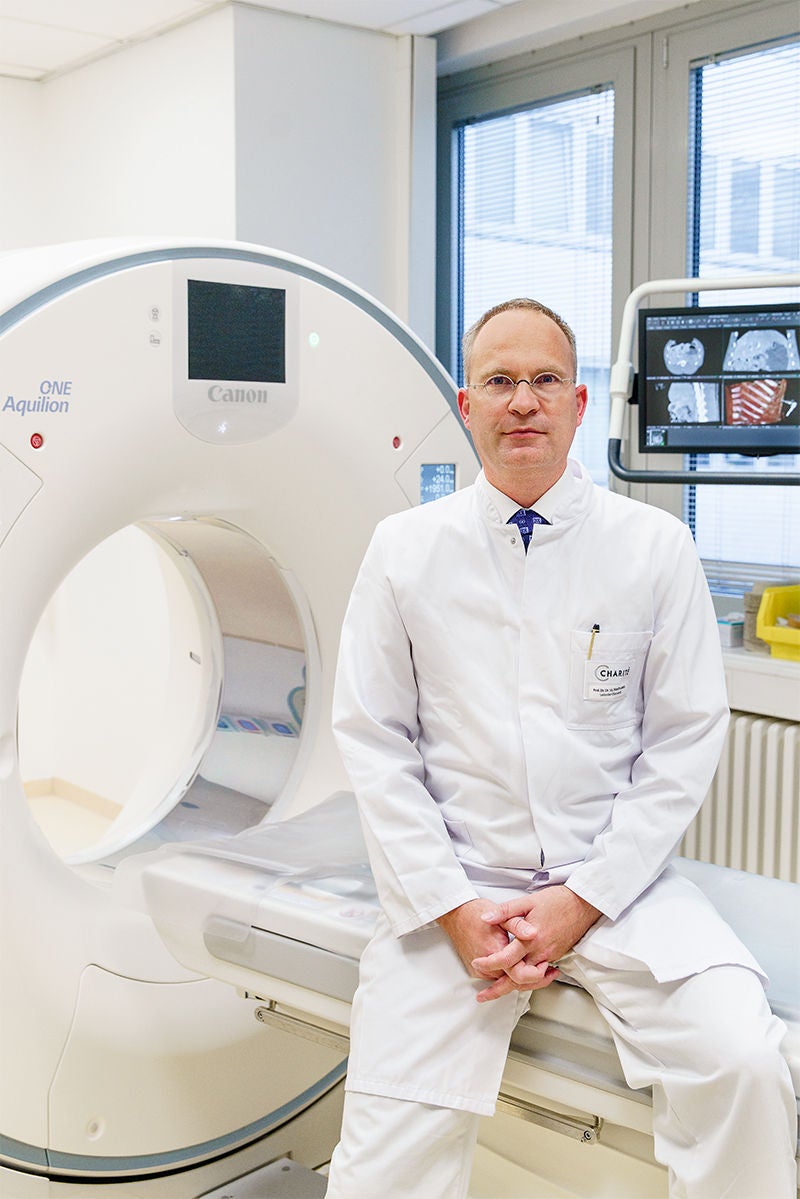
“In daily practice, images are enhanced significantly. Choosing the Aquilion ONE / PRISM Edition was the right decision.”
Prof. Dr. Stefan M. Niehues, Senior physician in the department of Radiology at Charité – University Hospital in Berlin, Germany
Cardiac examinations have now reached a level that is difficult to improve today.
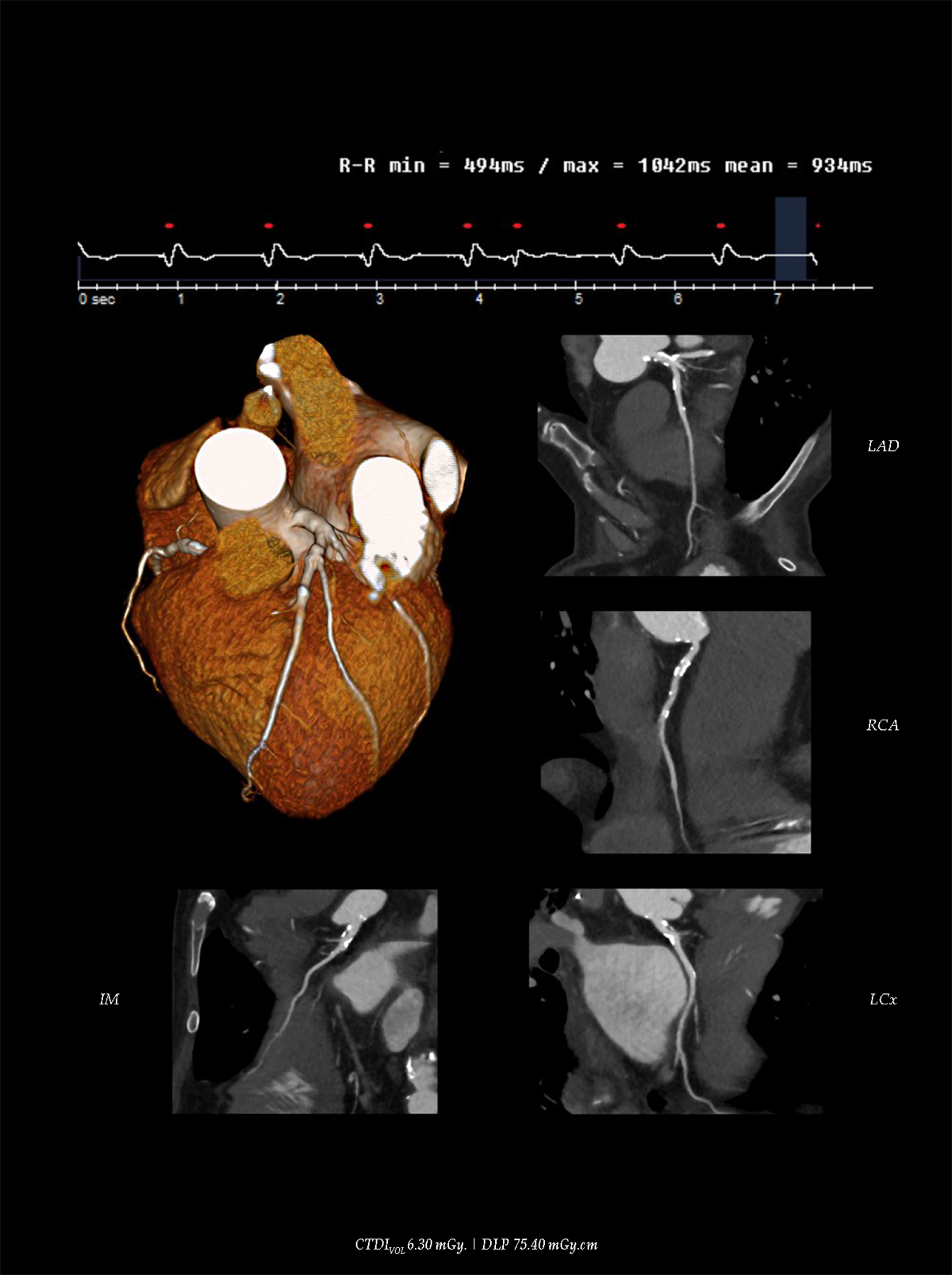
The necessary dose – less than 1 mSv for the Cardiac CTA - is consistently very low. Thanks to the short scan time and high temporal resolution, we can now directly examine the heart in volume CT, something we would have been hesitant about in the past - for example, in the case of a patient with arrhythmia and/or extremely high Agatson calcium scores (Case 2).
Reconstruction speed has also increased with the Aquilion ONE / PRISM Edition, but I hardly noticed the difference with previous Canon equipment, which already offered the possibility to completely reconstruct the images as soon as the patient left the room.
We never had a problem with reconstruction speed. It’s never been a bottleneck in our workflow.
DLR technology provides extremely clear and distinct images, although previous imaging with AIDR 3D on Canon CTs had quickly established itself and was long considered the highest technical level by the team. AiCE shows it can be even better. Inevitably, we would like to offer this high image quality to all our patients, and not only those who are examined with the latest system. //
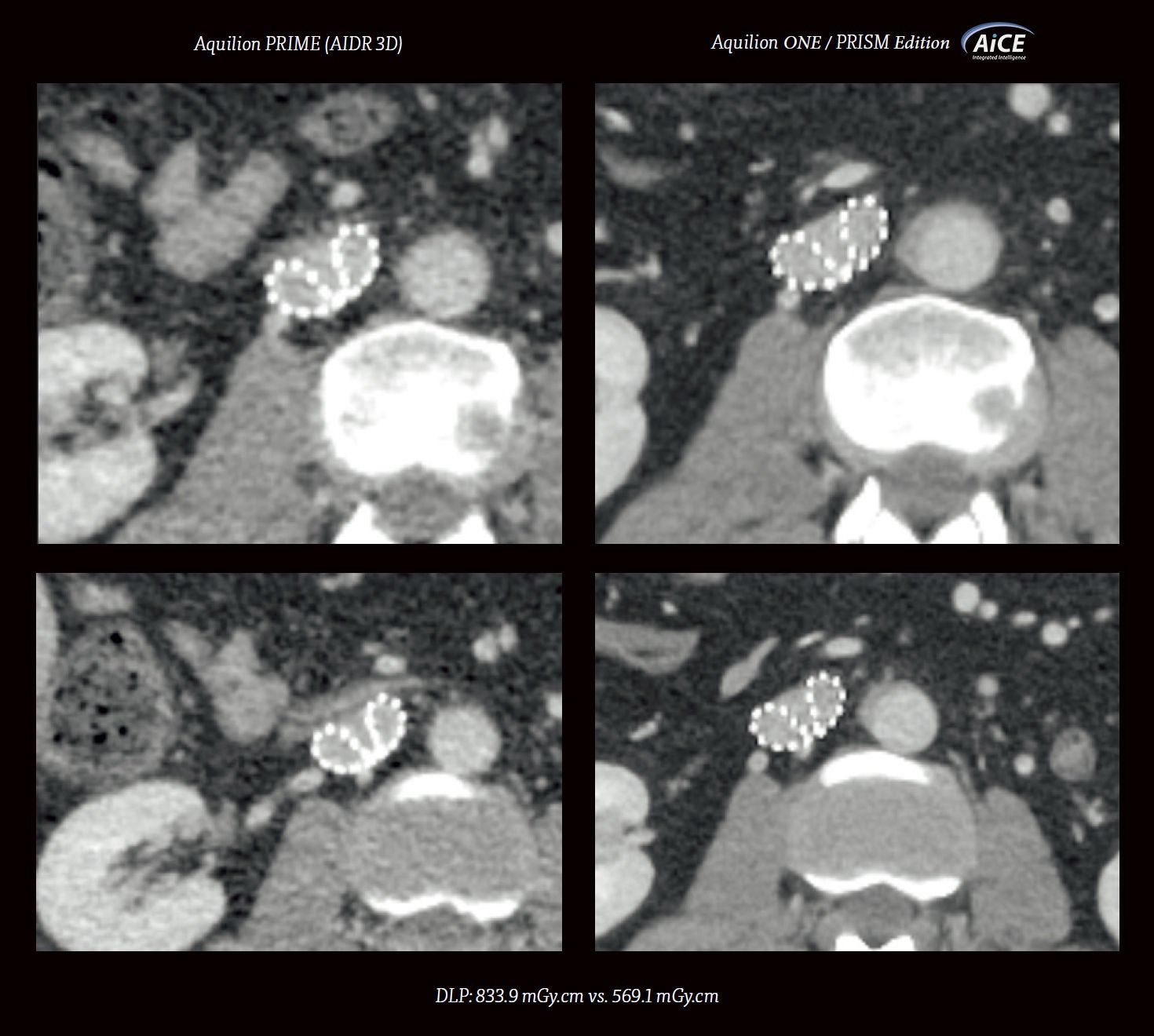
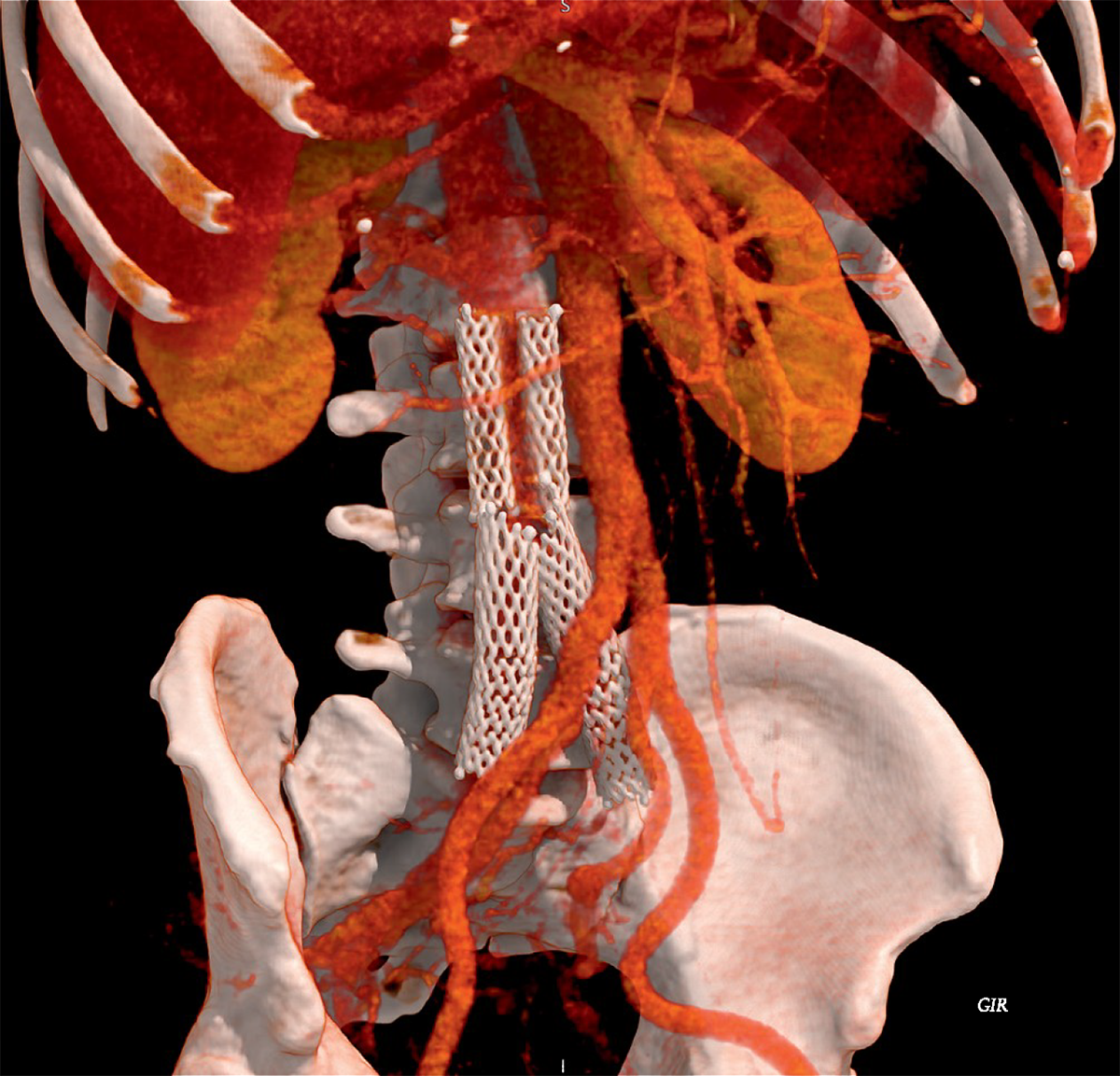
Case 1:
39-year-old patient undergoing venous stenting for post-thrombotic syndrome. Request vascular imaging for stent revision.
39-year-old patient undergoing venous stenting for post-thrombotic syndrome. Request vascular imaging for stent revision.
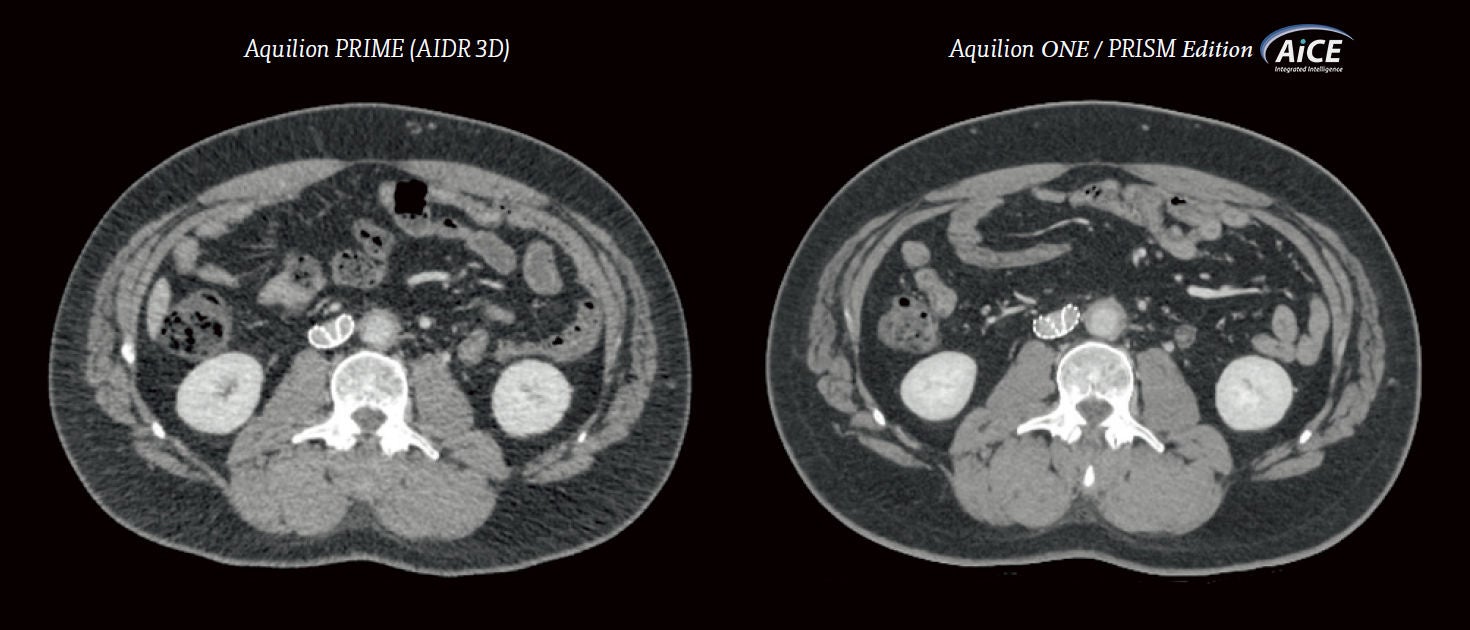
Case 2:
Cardiac CTA on a 82–year-old patient with arrhythmia and an Agatston score of 2392.
Cardiac CTA on a 82–year-old patient with arrhythmia and an Agatston score of 2392.
About Charité
Charité is one of the largest university hospitals in Europe. Charité extends over four campuses, and has close to 100 different Departments and Institutes, which make up a total of 17 different Charité Centers. Having marked its 300-year anniversary in 2010, Charité is now one of the largest employers in Berlin, employing 15,500 staff (or 18,700 if including its subsidiaries).
www.charite.de/en
Social Media


