

Maternal-Fetal Health, Gestational Diabetes, and Fetal Growth
Maternal-fetal health focuses on safeguarding the well-being of both mother and baby by preventing, detecting, and managing pregnancy complications. High-risk pregnancies may arise from preexisting conditions, pregnancy-related issues, maternal age, or lifestyle factors.
Growing evidence also shows long-term consequences. For instance, women with gestational diabetes (GDM) face a 50% risk of developing type 2 diabetes within 7–10 years after childbirth [1] .
Day 1 of the Obstetrics Days will focus on the diagnosis and management of gestational diabetes mellitus (GDM) and the assessment of fetal growth, highlighting how obstetric ultrasound supports better maternal and fetal outcomes.
Canon Medical Academy
Obstetrics Days Webinar | Day 1 | Maternal - Fetal Well-being
November 4 | 7pm (CET)

Day 1 | Maternal and Fetal Well-being
Ultrasound
November 4, 7 pm (CET) / 1 pm (EST)
Join Prof. Basky Thilaganathan,Prof. Makarios Eleftheriades, and Prof. Sanne Gordijn for this first appointment with the Obstetrics Days webinar series, made possible by the Canon Medical Academy.
The experts will discuss the diagnostic and management challenges of gestational diabetes mellitus (GDM) and the assessment of fetal growth, highlighting how obstetric ultrasound informs care pathways.
Learn from practical case examples and best practices drawn from everyday maternal-fetal medicine.
Program
- Introduction | Prof. Basky Thilaganathan
- Gestational Diabetes: Diagnosis and Management | Prof. Makarios Eleftheriades
- Fetal Growth Restriction, Definition and Placental Pathology | Prof. Sanne Gordijn
- Live Q&A moderated by Prof. Basky Thilaganathan
- Learn the importance of looking at both the fetus and the mother-to-be
- To expand clinical knowledge and improve clinical skills on GDM diagnosis and management
- To understand the concept and background of fetal growth restriction, with a focus on placental function
- Participate in the live Q&A to find answers to your questions
Speakers and Presentations

Moderator: Prof. Basky Thilaganathan, MD, FRCOG Professor and Director of Fetal Medicine
St George’s University Hospital NHS Foundation Trust
London, UK
St George’s University Hospital NHS Foundation Trust
London, UK
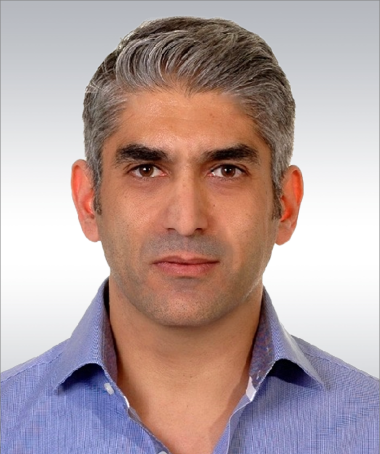
Speaker: Prof. Makarios Eleftheriades, MD, PhD Professor of Obstetrics-Gynaecology, Maternal-Fetal and Perinatal Medicine; Head of the 2nd
Department of Obstetrics and Gynaecology "Aretaieio" Hospital
School of Medicine, National and Kapodistrian University of Athens (EKPA)
Athens, Greece
Presentation: Gestational Diabetes: Diagnosis and Management
Gestational diabetes mellitus (GDM) is defined as any degree of carbohydrate intolerance with onset or first recognition during pregnancy. According to the American Diabetes Association (ADA), GDM is carbohydrate intolerance diagnosed after 15 weeks of gestation. This entity has been increasing in prevalence and has been associated with various maternal and perinatal adverse outcomes.
There is much controversy about the diagnostic criteria and management of GDM. Current screening models are based on maternal and obstetric characteristics, all lacking a strong positive predictive value. A one-step or a two-step approach is used for screening/diagnosis of GDM, and Glucose management to achieve glucose levels in the target range is the key intervention for reducing the frequency and/or severity of complications related to GDM.
Department of Obstetrics and Gynaecology "Aretaieio" Hospital
School of Medicine, National and Kapodistrian University of Athens (EKPA)
Athens, Greece
Presentation: Gestational Diabetes: Diagnosis and Management
Gestational diabetes mellitus (GDM) is defined as any degree of carbohydrate intolerance with onset or first recognition during pregnancy. According to the American Diabetes Association (ADA), GDM is carbohydrate intolerance diagnosed after 15 weeks of gestation. This entity has been increasing in prevalence and has been associated with various maternal and perinatal adverse outcomes.
There is much controversy about the diagnostic criteria and management of GDM. Current screening models are based on maternal and obstetric characteristics, all lacking a strong positive predictive value. A one-step or a two-step approach is used for screening/diagnosis of GDM, and Glucose management to achieve glucose levels in the target range is the key intervention for reducing the frequency and/or severity of complications related to GDM.

Speaker: Prof. Sanne Gordijn, MD, PhD Gynecologist-Perinatologist
UMCG University Medical Center Groningen
Groningen, The Netherlands
Presentation: Fetal Growth Restriction, Definition and Placental Pathology
Fetal growth is highly dependent on maternal, fetal, and placental health. Fetal growth restriction means that the fetus does not reach its intrinsic growth potential.
Although small fetal size has a correlation with growth restriction, it is only of limited value for risk stratification. Other markers, such as Doppler ultrasound and concurrent obstetric conditions, can help.
Often, FGR is due to placental pathologic lesions. Several markers can help identify those and placental histopathological evaluation can confirm the diagnosis and aid future management.
UMCG University Medical Center Groningen
Groningen, The Netherlands
Presentation: Fetal Growth Restriction, Definition and Placental Pathology
Fetal growth is highly dependent on maternal, fetal, and placental health. Fetal growth restriction means that the fetus does not reach its intrinsic growth potential.
Although small fetal size has a correlation with growth restriction, it is only of limited value for risk stratification. Other markers, such as Doppler ultrasound and concurrent obstetric conditions, can help.
Often, FGR is due to placental pathologic lesions. Several markers can help identify those and placental histopathological evaluation can confirm the diagnosis and aid future management.
Prof. Basky Thilaganathan, MD, FRCOGProf. Basky Thilaganathan is Director of Fetal Medicine at St George’s Hospital, London. He has authored over 450 publications with a major research focus on placental dysfunction leading to preeclampsia, fetal growth restriction, and stillbirth (TED talk).
He led the development of the algorithm-based screening at St George’s, which has resulted in an 80% reduction in preterm preeclampsia and a 30% reduction in perinatal death.
Prof. Thilaganathan is Clinical Director of the Tommy’s National Centre for Maternity Improvement, based at the Royal College of Obstetricians and Gynaecologists (RCOG), and is Editor Emeritus of Ultrasound in Obstetrics and Gynecology.
He represents the RCOG on the UK National Screening Committee and the Department of Health’s Saving Babies’ Lives Care Bundle oversight committee. His unit’s work has also been featured in a TV series and profiled in The Times magazine.
Prof. Makarios Eleftheriades, MD, PhD Makarios Eleftheriades, MD, PhD, completed his medical degree in 1995 and became a certified specialist in obstetrics and gynecology in 2004 in Athens, Greece. He pursued several fellowships in London at the renowned Harris Birthright Centre under Professor Kypros Nicolaides, earning his Diploma in Fetal Medicine in 2015.
Prof. Eleftheriades is actively involved in teaching medical students and doctors across Greece. He has received multiple awards for his research contributions.
Prof. Eleftheriades has published numerous articles in peer-reviewed journals and currently serves as Head of the 2nd Department of Obstetrics and Gynecology, Medical School, University of Athens
Prof. Sanne Gordijn, MD, PhD Prof. Sanne Gordijn is a gynecologist, perinatologist, and researcher with a strong focus on fetal growth restriction, placental pathology, and perinatal outcomes. She developed the internationally implemented Amsterdam Criteria for placental pathology and the current definition for fetal growth restriction adopted by ISUOG and FIGO.
She has designed and completed multiple national and international randomized controlled trials (RCT’s) on placental dysfunction, as well as large retrospective database linkage studies.
With extensive experience in PhD supervision and research grant acquisition, she is dedicated to improving perinatal care through evidence-based practice and research.
View the Other Obstetrics Days
Other webinars that may interest you
References
Disclaimers
- The opinions expressed in this material are solely those of the presenter and not necessarily those of Canon Medical Systems. Canon Medical Systems does not guarantee the accuracy or reliability of the information provided herein.
- The clinical results, performance and views described in this video/webinar are the experience of the clinician. Results may vary due to clinical setting, patient presentation and other factors. Many factors could cause the actual results and performance of Canon Medical’s products to be materially different from any of the aforementioned.
- Some products shown might not be available in all regulatory jurisdictions, please consult with your local Canon sales office for availability in your region.
Social Media


